
Importer of Record (IOR) and Exporter of Record (EOR) services in Lebanon for IT and Telecommunications Equipment, Laboratory and Research Systems, Data Centre Hardware, Semiconductor Equipment, Medical Devices, Aerospace Components, and Industrial High-Value Hardware, supported by Remote-Hands support for on-ground execution, customs-aligned delivery, and technical coordination across Lebanon.




Lebanon operates a highly documentation-sensitive import environment shaped by strict customs controls, ongoing economic constraints, and heightened scrutiny on high-value and regulated equipment. For foreign manufacturers, NGOs, and infrastructure project owners shipping technology systems into Lebanon, clearance feasibility depends heavily on having a locally accountable Importer of Record supported by compliant customs execution.
Lebanon’s economy remains import-reliant for essential technology infrastructure, medical devices, industrial components, and telecommunications systems. With a population of approximately 5.5 million, demand continues across hospitals, research institutions, telecom networks, and industrial sites, despite macroeconomic volatility.
Inbound shipments are primarily handled through Port of Beirut, Port of Tripoli, and Beirut–Rafic Hariri International Airport, where Lebanese Customs applies rigorous controls on HS classification, declared valuation, importer accountability, and technical compliance documentation.
Uproot Technologies enables compliant, controlled, and execution-ready movement of equipment into and out of Lebanon by assuming full IOR and EOR responsibility, supported by Remote-Hands support for physical handling, delivery coordination, and site-level execution.
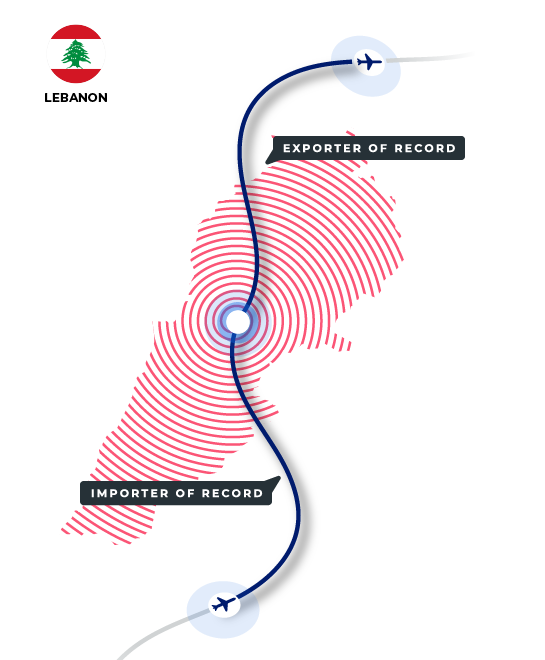
All imports and exports in Lebanon are regulated by Lebanese Customs under national customs law, with strict enforcement of importer accountability, valuation accuracy, and documentation discipline, especially for technology and medical shipments.
Key compliance requirements include:
• Mandatory customs declarations through accountable importer entities
• Correct HS code classification under Lebanese tariff schedules
• Accurate customs valuation supported by transaction documentation
• Import VAT and duty assessment where applicable
• Country-of-origin disclosure
• Product conformity and technical documentation review
• Declared end-use and end-user validation for controlled categories
As the Importer of Record, Uproot Technologies assumes full legal responsibility for customs declarations, VAT and duty exposure, regulatory compliance, and audit accountability, reducing operational risk for foreign shippers.
Servers, routers, switches, telecom systems, and enterprise IT infrastructure imported into Lebanon require accurate classification and complete technical documentation, as customs authorities apply heightened scrutiny to electronics and network hardware.
Remote-Hands support assists with receipt verification, controlled handling, and delivery execution.
Scientific instruments, analytical systems, and diagnostic laboratory devices imported for universities, healthcare labs, and industrial testing centres require precise documentation and importer accountability.
Remote-Hands support services support secure delivery and controlled site handover.
Lebanon’s digital infrastructure depends heavily on imported servers, storage systems, networking equipment, and power hardware. High-value data centre shipments require strict valuation discipline and configuration consistency.
Remote-Hands support enables staging coordination and deployment readiness.
Electronics measurement tools, inspection devices, calibration systems, and sensitive test equipment require detailed technical files and declared operational end use.
Uproot Technologies provides IOR/EOR oversight with Remote-Hands support execution for high-value equipment.
Diagnostic imaging systems, monitoring devices, and clinical equipment imported into Lebanon require medical conformity documentation and compliance alignment.
Remote-Hands support assists with healthcare deliveries and controlled handover.
Industrial automation systems, aerospace components, and mission-critical control equipment require precise HS classification, valuation accuracy, and strong documentation discipline.
Uproot Technologies manages compliance with on-ground Remote-Hands support coordination for project deployments.
Lebanon’s import environment demands documentation accuracy, importer accountability, and physical execution capability across ports, airports, industrial zones, and institutional delivery sites. Uproot Technologies delivers an integrated compliance and execution model including:
• Importer of Record services
• Exporter of Record services
• Air-freight coordination via Beirut–Rafic Hariri International Airport
• Sea-freight coordination via Port of Beirut and Port of Tripoli
• Customs clearance management
• VAT and duty handling
• Remote-Hands support operational execution
This structure allows organizations to ship into Lebanon without establishing a local legal entity, while maintaining regulatory control and delivery predictability.
Typical IOR and EOR shipments into Lebanon require:
• Commercial invoice
• Packing list
• Air waybill or bill of lading
• HS code classification
• Customs declaration
Uproot Technologies prepares, validates, and submits documentation as the acting Importer of Record or Exporter of Record.
Depending on equipment type, documentation may include:
• Product conformity certificates
• Technical datasheets and specifications
• CE or EMC compliance references where applicable
• Medical device compliance documentation
• End-user and end-use declarations
Uproot Technologies supports organizations importing and exporting regulated, high-value, and mission-critical equipment into Lebanon. Our teams manage customs compliance and technical coordination across Port of Beirut, Port of Tripoli, Beirut–Rafic Hariri International Airport, industrial zones, research institutions, medical facilities, and infrastructure project sites.
With Remote-Hands support fully integrated into our IOR and EOR services, clients gain on-ground execution capability, local accountability, and operational continuity.
With global coverage spanning 155+ countries, Uproot Technologies connects Lebanon with Asia-Pacific, the United States, Europe, the Middle East, and Africa, ensuring compliant cross-border equipment movement at enterprise scale.

Providing expert advice on navigating import/export customs laws, tariffs, and incentives, and assisting with strategic planning for customs compliance.

Securing and managing all required import and export licenses and permits, particularly for regulated or dual-use goods, to ensure smooth customs clearance.

Preparing and managing all necessary import/export documentation, including commercial invoices, packing lists, bills of lading, certificates of origin, and customs permits.

Coordinating logistics for imports and exports, including transportation, warehousing, and ensuring timely delivery while meeting all customs compliance requirements.

Calculating, paying, and managing customs duties, VAT, and any applicable excise taxes for both imports and exports on behalf of the importer/exporter.

Ensuring that all imports and exports meet regulatory standards, including safety, technical, and product certification requirements for full customs compliance.

Handling the entire customs clearance process for both imports and exports, ensuring full compliance with customs regulations for smooth entry or exit of goods.

Mitigating risks associated with customs delays, non-compliance, or penalties by ensuring all import/export processes adhere strictly to customs compliance regulations.

Acting as the legal Importer of Record (IOR) or Exporter of Record (EOR) on behalf of the client, ensuring full customs compliance with all relevant laws and regulations.


